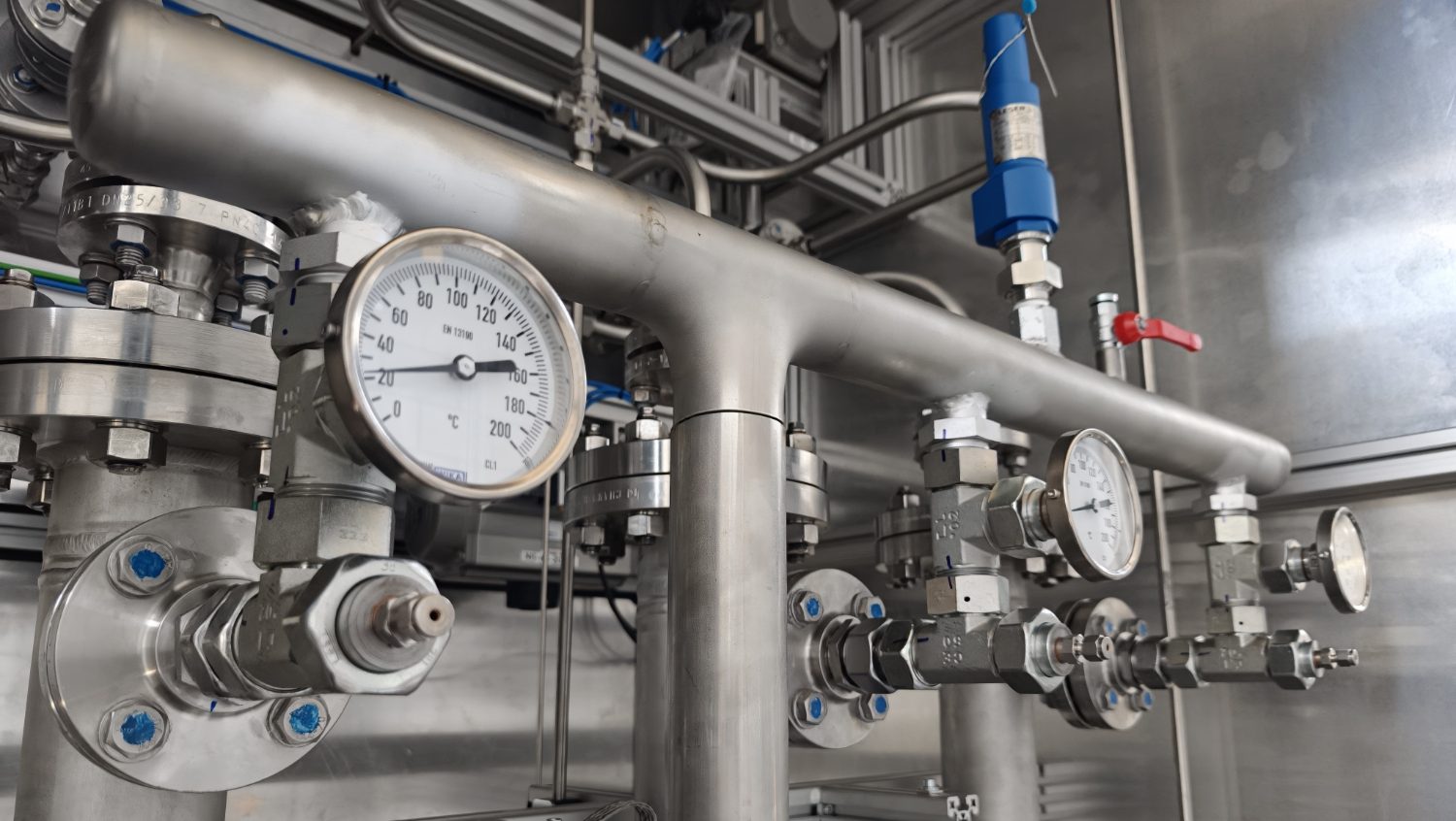
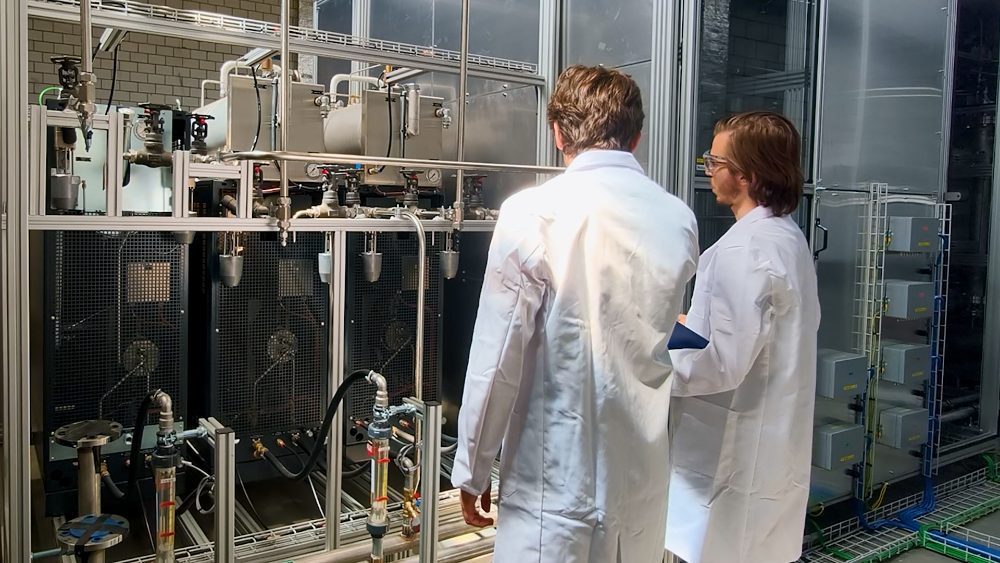
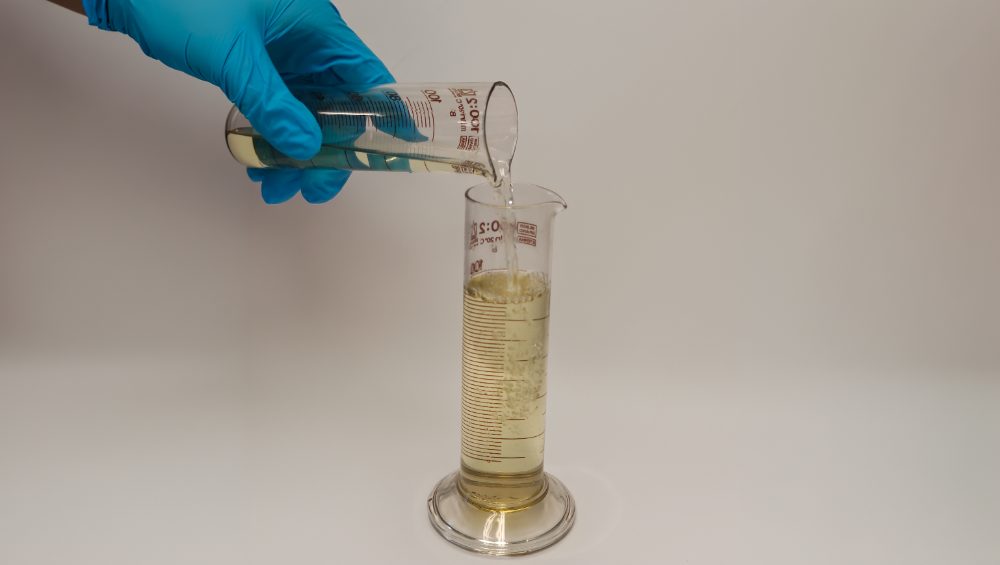
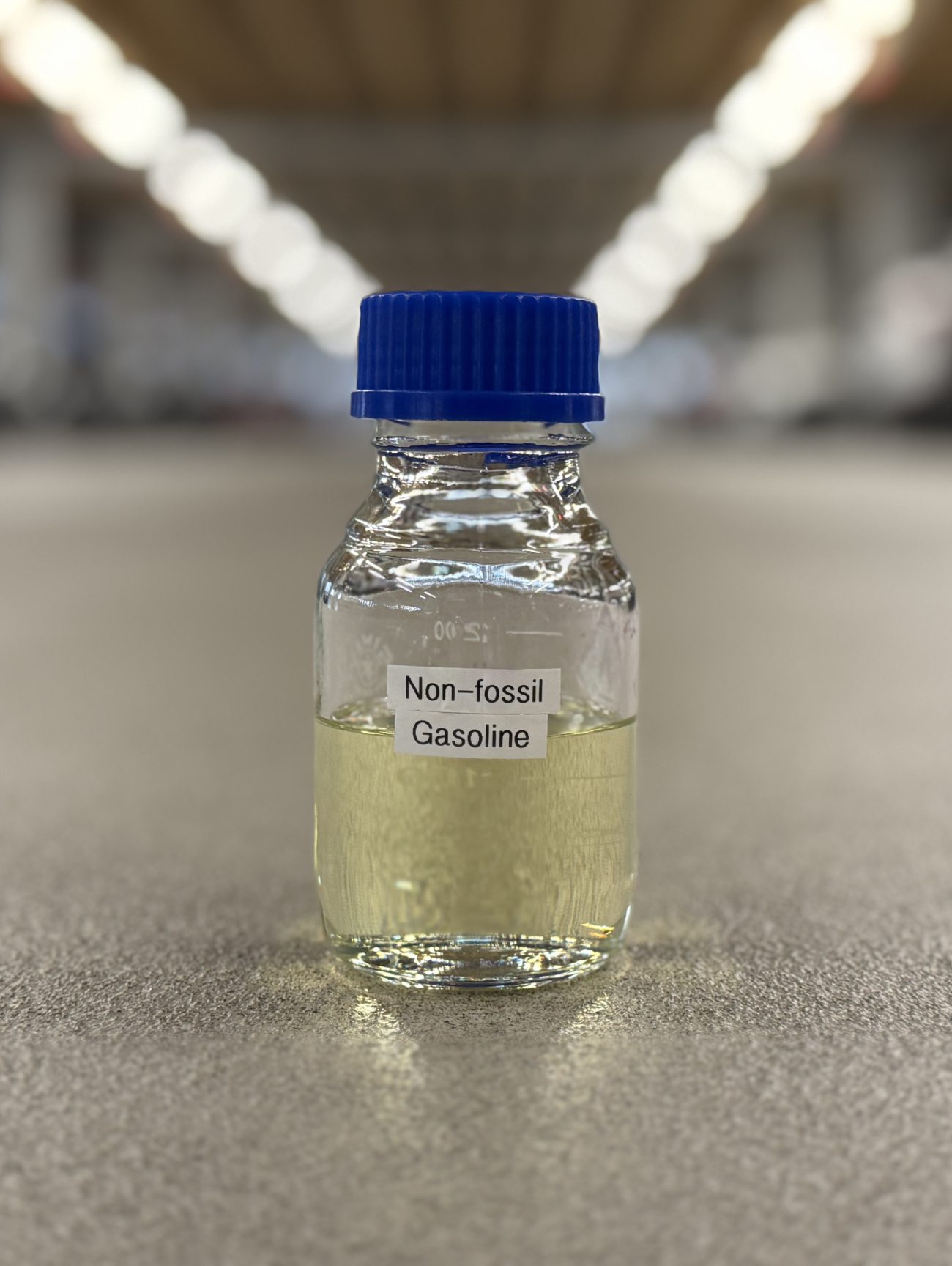
Five disciplined steps, on standard industrial equipment.
Step 1 of 5
Sustainable feedstock
We start with sustainable alcohols made from biological sources or renewable electricity. These provide the carbon needed to produce the fuel, while their origin and emissions are tracked throughout the process.
Purity grade
> 94%
Source pathway
PtL / Biogenic
Step 2 of 5
Catalytic conversion
A catalyst converts the alcohol molecules into gasoline-range hydrocarbons. Carefully controlled reaction conditions maximise the production of gasoline-range molecules.
Carbon efficiency
> 95%
Step 3 of 5
Fraction recovery
Standard separation steps recover the desired liquid products. Any material that has not yet reacted is returned to the process, helping use more of the available carbon.
Product recovery
Target liquid fractions
Unconverted material
Returned to the process
Step 4 of 5
Finishing & blending
The gasoline-range product is refined and blended to achieve the required fuel properties. The resulting fuel is designed for use in existing engines, fuelling stations and distribution systems.
Infrastructure compatibility
100%
Storage stability
> 6 months
Step 5 of 5
Verified output
The result is a gasoline-range fuel designed for use in existing engines and distribution systems. Before leaving the facility, each batch undergoes analytical testing to verify that it meets the required fuel-quality standards.
Octane rating
RON ≥ 95
Scientific foundation
"Grounded in top-tier scientific research and peer-reviewed publications."
Developed since 2021 at Empa (the Swiss Federal Laboratories for Materials Science and Technology) by PhD experts across chemistry, chemical engineering and analytical science. Our focus now is disciplined scale-up to industrially relevant systems.
Five disciplined steps, on standard industrial equipment.
01 / 05
Scroll to follow the process
STEP 01
Sustainable feedstock
We start with sustainable alcohols made from biological sources or renewable electricity. These provide the carbon needed to produce the fuel, while their origin and emissions are tracked throughout the process.
Purity grade
> 94%
Source pathway
PtL / Biogenic
STEP 02
Catalytic conversion
A catalyst converts the alcohol molecules into gasoline-range hydrocarbons. Carefully controlled reaction conditions maximise the production of gasoline-range molecules.
Carbon efficiency
> 95%
STEP 03
Fraction recovery
Standard separation steps recover the desired liquid products. Any material that has not yet reacted is returned to the process, helping use more of the available carbon.
Product recovery
Target liquid fractions
Unconverted material
Returned to the process
STEP 04
Finishing & blending
The gasoline-range product is refined and blended to achieve the required fuel properties. The resulting fuel is designed for use in existing engines, fuelling stations and distribution systems.
Infrastructure compatibility
100%
Storage stability
> 6 months
STEP 05
Verified output
The result is a gasoline-range fuel designed for use in existing engines and distribution systems. Before leaving the facility, each batch undergoes analytical testing to verify that it meets the required fuel-quality standards.
Octane rating
RON ≥ 95
Scientific foundation
"Grounded in top-tier scientific research and peer-reviewed publications."
Developed since 2021 at Empa (the Swiss Federal Laboratories for Materials Science and Technology) by PhD experts across chemistry, chemical engineering and analytical science. Our focus now is disciplined scale-up to industrially relevant systems.